#Displaced but not Defeated
AAV Fulani Radio in Nigeria: A New Radio Format to Help Find Missing Persons and Reunite Families
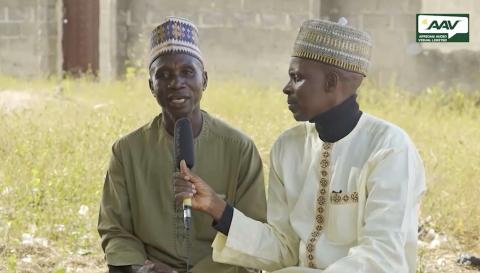
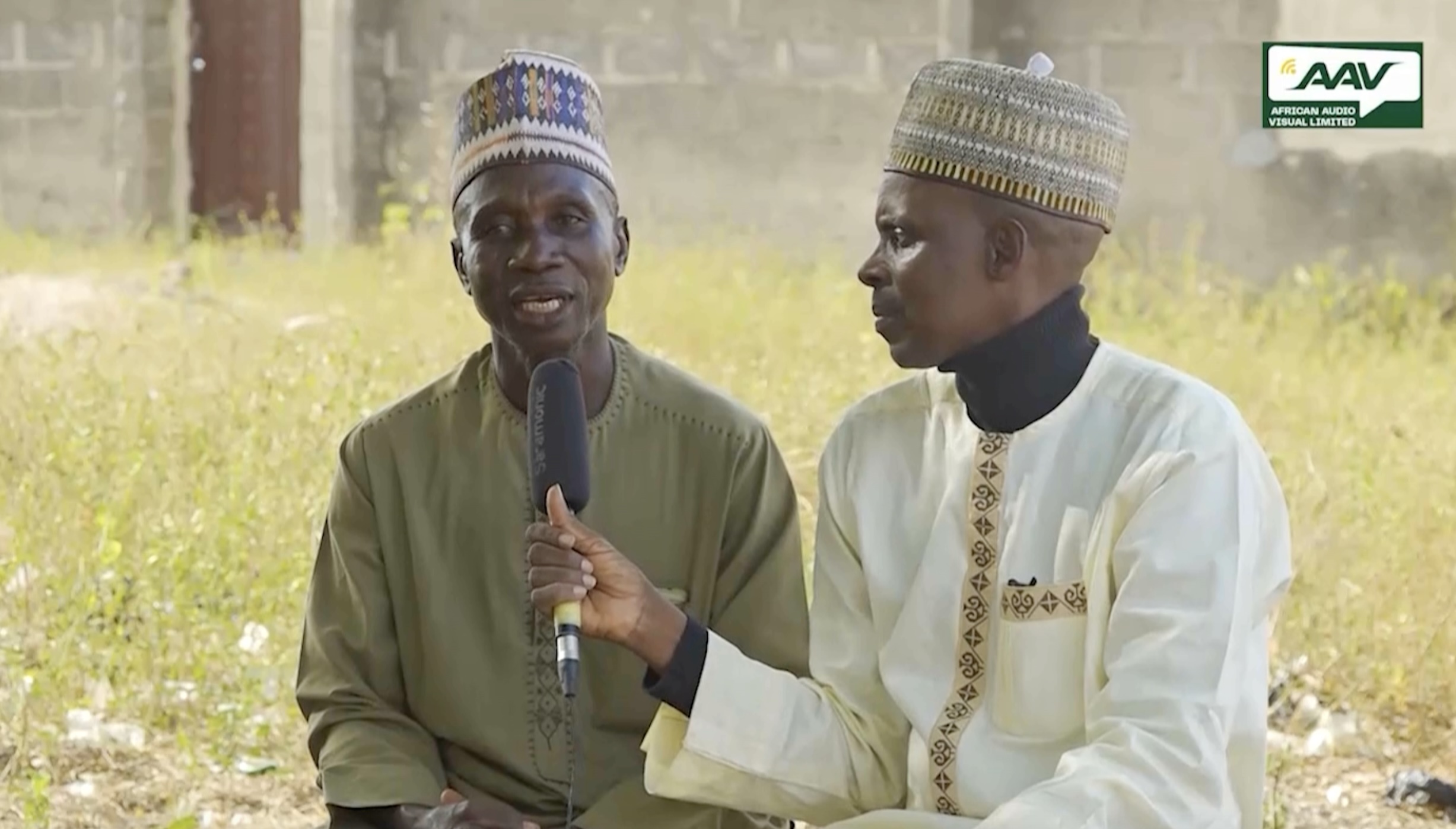
AAV Fulani Radio in Nigeria is developing a new broadcasting format dedicated to helping locate missing persons, people who have disappeared, and family members living in the diaspora. Through radio clubs, people who have rebuilt their lives after being displaced by Boko Haram, ISWAP or land conflicts learn how to trace missing family members and support their reintegration.
Our Solidarity Project
AAV (Aynol Adilaaku Vision) Radio Fulfulde was founded in 2019 (under the name Radio Koodé) as the first radio station to broadcast in Fulfulde. In West Africa and the Sahel, approximately 70 million people belong to the Fulani ethnic group. The radio station sees itself as a peacebuilding force in the land conflicts between nomadic pastoralists and farmers in the Sahel, as well as a voice for the Fulani, who are often stigmatized as “terrorists” in Nigeria.
More than ten years after the mass displacements in northern Nigeria, many people have managed to rebuild their lives but are still searching for family members who have gone missing.
The project #missing – Displaced but not Defeated supports families in their search for missing relatives. Together with the Nigerian Red Cross, radio clubs are being established where communities discuss how missing persons can be traced and reunited with their families, and organize search efforts.
AAV Fulfulde Radio provides a platform where people searching for missing relatives can organize themselves and exchange information through chat groups.
https://www.youtube.com/watch?v=gzUQFrupXzw
Background
Over the past ten-plus years, more than three million people have fled the war in north-eastern Nigeria. Internally displaced persons (IDPs), survivors and victims of the conflict involving Boko Haram (Jama'at Ahl al-Sunnah li-l-Da'wah wa-l-Jihad) and ISWAP (Islamic State West Africa Province) have fled north-eastern Nigeria for the Middle Belt and/or neighbouring countries such as Niger, Chad and Cameroon. This displacement has contributed to new conflicts over land and natural resources.
The Fulani ethnic group has been disproportionately affected by displacement caused by Boko Haram, ISWAP and other armed militias. In addition, many Fulani have been abducted by security forces in connection with violent disputes over land use and grazing areas.
The disappearance of people in Nigeria is not an isolated criminal justice issue. It is a consequence of armed conflict, kidnappings, organized crime, flight and forced displacement. For the families concerned, this often means years of uncertainty.
One particularly well-known example is the abduction of 276 schoolgirls in Chibok by Boko Haram in 2014. The incident sparked international outrage. Even years later, not all of the girls have returned.
However, the problem extends far beyond individual high-profile abductions. In July 2026, the International Committee of the Red Cross (ICRC) and the Nigerian Red Cross Society were handling approximately 17,000 active cases of missing persons in Nigeria. This figure does not represent the total number of missing people; it refers exclusively to cases actively being followed up by the Red Cross network. Causes include armed conflict and abductions, as well as violence, disasters and migration.
The consequences for family members are particularly devastating. For years, they may have no idea whether a missing relative is still alive, where they are or what has happened to them. The ICRC therefore supports families in their search efforts and helps restore contact between separated relatives.
Serious abductions of schoolchildren continued in 2025. In November, for example, more than 300 schoolgirls, schoolboys and teachers were abducted in Kebbi and Niger States. Some of those affected were subsequently released. Abductions and kidnappings have increased as jihadist groups operating from Mali have expanded their activities into Kebbi and Niger.
According to the Nigerian Red Cross, more than half of the people classified as missing who are held in formal and informal detention centres belong to the Fulani ethnic group. They are detained as prisoners without charge and denied contact with their families. Accused of terrorism, they are abducted by police officers and criminal groups, extorted for ransom and, if their families cannot pay, held and tortured in prisons or prison-like facilities.
Many are also forcibly recruited into armed service by criminal and jihadist groups. This further reinforces existing prejudices against the Fulani, particularly the accusation that they are all terrorists.
Displacement and forced migration, climate change and criminal violence are creating long-term migration pressures that extend to other regions of the world.
Nigeria has a diaspora of just over two million people, out of a total population of approximately 240 million. More than a quarter of the Nigerian diaspora lives in Europe, with a similar proportion in the United States. Other attractive destinations include the Gulf countries, particularly Saudi Arabia and the United Arab Emirates, as well as China.
The irregular migration route across the Sahara claims many lives every year. Nevertheless, the prospect of migrating abroad remains attractive. Remittances from the Nigerian diaspora to their home country amount to more than USD 20 billion annually, and the figure continues to rise.
The radio project is breaking new ground in its efforts to make family reunification possible. It addresses the needs of internally displaced people in Nigeria (IDPs), as well as victims of enforced disappearance and forced recruitment, and people who have gone missing along migration routes.
The scale of the problem is almost beyond comprehension.