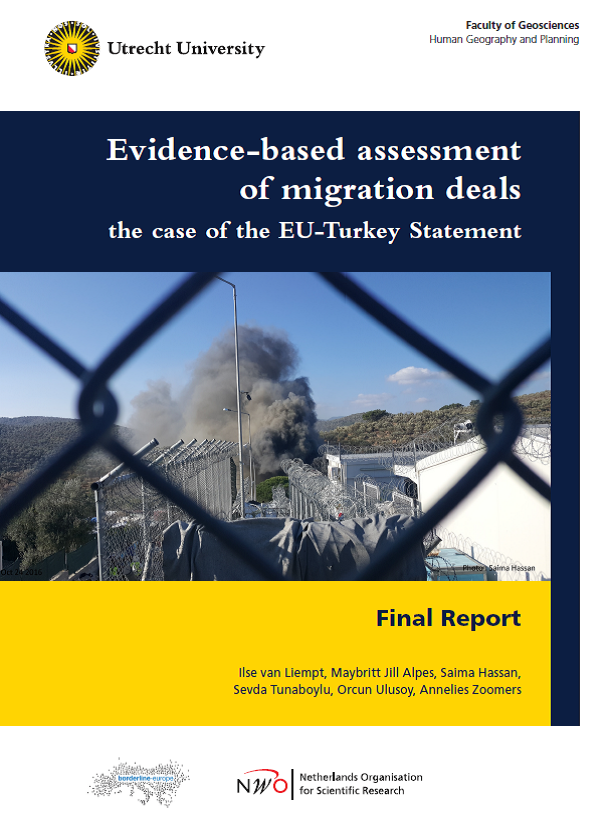
Evidence-based assessment of migration deals the case of the EU-Turkey Statement

In the context of increasing asylum and migration flows we observe an important policy move towards partnerships between EU countries and sending countries. The focus of this project is on readmission agreements with Turkey, but with new deals in the making the results of this project will be of wider use and value for European policymakers. At its core, the EU Turkey deals aim to reduce irregular migration, decrease smuggling and human right violations and migrant deaths. In exchange, EU Member States promised to increase resettlement of Syrian refugees residing in Turkey, accelerate visa liberalization for Turkish nationals, and boost existing financial support for Turkey’s refugee population. This project will focus on the effects of the deals. How did the deal transform mixed migration flows and people’s reliance on human smugglers therein? What has been the impact of the deal on resettlement from Turkey to Europe? Field research (document analysis and interviews with forced returnees and migrants on the move) will be conducted to come up with evidence based insights on the implementation and the effects of the deal.


Current projects

Show all


The Mediterranean: monitoring, research, identification

borderline-europe is involved in two very different MONITORING projects:

  • In ‘Detention, illegalisation and the so-called CEAS reform in southern Italy’, the focus is on the implementation of the European Pact on Migration at the EU's external border. The project started in September 2024.
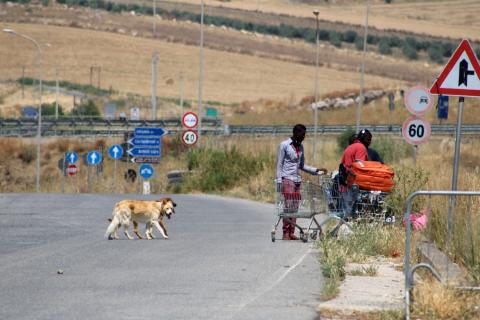
  • "Invisible" is about the situation of refugees in Sicily.
  • Mem.Med is a cooperation project between many entities that carefully focus on the people who have not made it through the dangerous crossing of the Mediterranean Sea. borderline-europe supports the project through volunteers.
read more

Sudan: Documentation of enforced disappearances

What does the externalisation of the EU borders to Sudan have to do with the outbreak of war? With the so-called Karthoum process, the EU's external border was outsourced to Turkey and, more recently, Tunisia and Egypt. In Sudan, the closure of the borders was made possible by dictator El Bashir and his accomplice Hemetti.

read more

Externalisation of EU Migration Policy

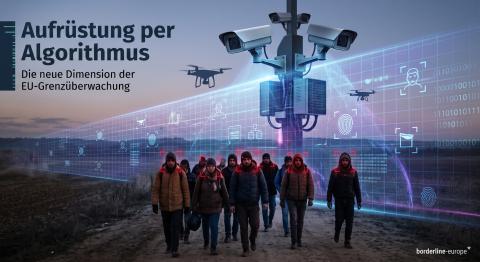
Modern border control no longer takes place at the barrier. Externalisation of the EU's external borders means outsourcing control via pushbacks, pullbacks and visa refusals, and is always associated with the use of force and a lot of money for the respective governments.In future, even asylum applications will be processed in closed centres. Here are our articles on restrictions on freedom of movement and border fortifications.

read more

Central Mediterranean Info

borderline-europe started in March 2019 to put together information about the situation in the Central Mediterranean Sea for internal research reasons. ISome of the data are published here and on our social media channels.

read more

Digital Exhibition

Voices of 15 people on the EU borders:They are fleeing, they have already come a long way, they want to go to Europe, to a safe place, to a place where human rights apply —but then suddenly they can't move any further.

read more

Criminalization of Migration & Solidarity in Italy

The collective attempt of shutting down borders of the EU takes place by numerous means of deterrence to prevent people from seeking safety in Europe. The criminalisation of people on the move is part of it.A project in cooperation with UNITED4RESCUE

read more