
Externalisation of EU Migration Policy
The European Commission's Common Asylum System has been adopted. It is to be implemented in the coming months. It is clear that there are three aspects that need to be monitored critically: the establishment of (closed) reception centres at the external borders, (chain) deportations and (alleged) monitoring of human rights compliance in the new procedures. To date, there have been numerous warnings that the CEAS can only be implemented with massive violations of human rights, but no statements as to what monitoring should look like, how it can be guaranteed that human rights violations are avoided and, in the event of a breach of the law, that penalties are imposed.
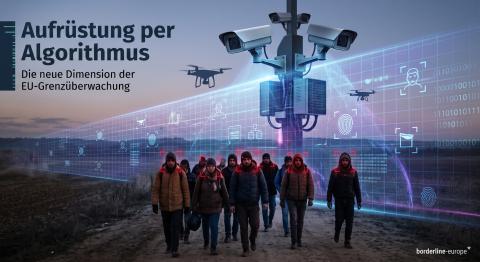
So what is happening at the EU's external borders? How does externalised border control work? Picture: piqcels.com
- The first tour - the failure of Italy's externalisation policy in Albania - 24.10.2024 (only in German, English will follow soon)
The Italian government has made it happen and brought the first 16 people to Albania. A highly symbolic move by the Meloni government that has been heavily criticised. After four people - two minors and two people with special needs - who should not have been brought to Albania in the first place had to be returned to Italy by the Italian coast guard, the detention was not extended for the remaining 12 people either. The Meloni government's expensive and politically controversial plan raises many questions, including its legality and effectiveness.
- Freedom of movement from Lebanon instead of criminalisation of migration - 30.09.2024In her article, Pilchowski reports on the criminalisation of fleeing across the Mediterranean. Finding legal options to leave the country is almost impossible. Arrests of boat drivers and human rights activists are on the rise, and the current war situation in Lebanon caused by Israel's attacks is also making the already precarious situation of refugees and Lebanese people much more difficult.
- Lebanon as another gatekeeper for the terrified EU? - 20.05.24
In addition to Libya and Tunisia, the main points of departure to Italy, this year we have taken up the topic of Lebanon, as there are always refugees crossing the Mediterranean from there. So we asked Anja Pilchowski and her colleague Ahmad Ibrahim what the situation is like on the ground. In their article ‘Lebanon, another gatekeeper for the frightened EU?’, they describe the extent to which EU policy is involved.