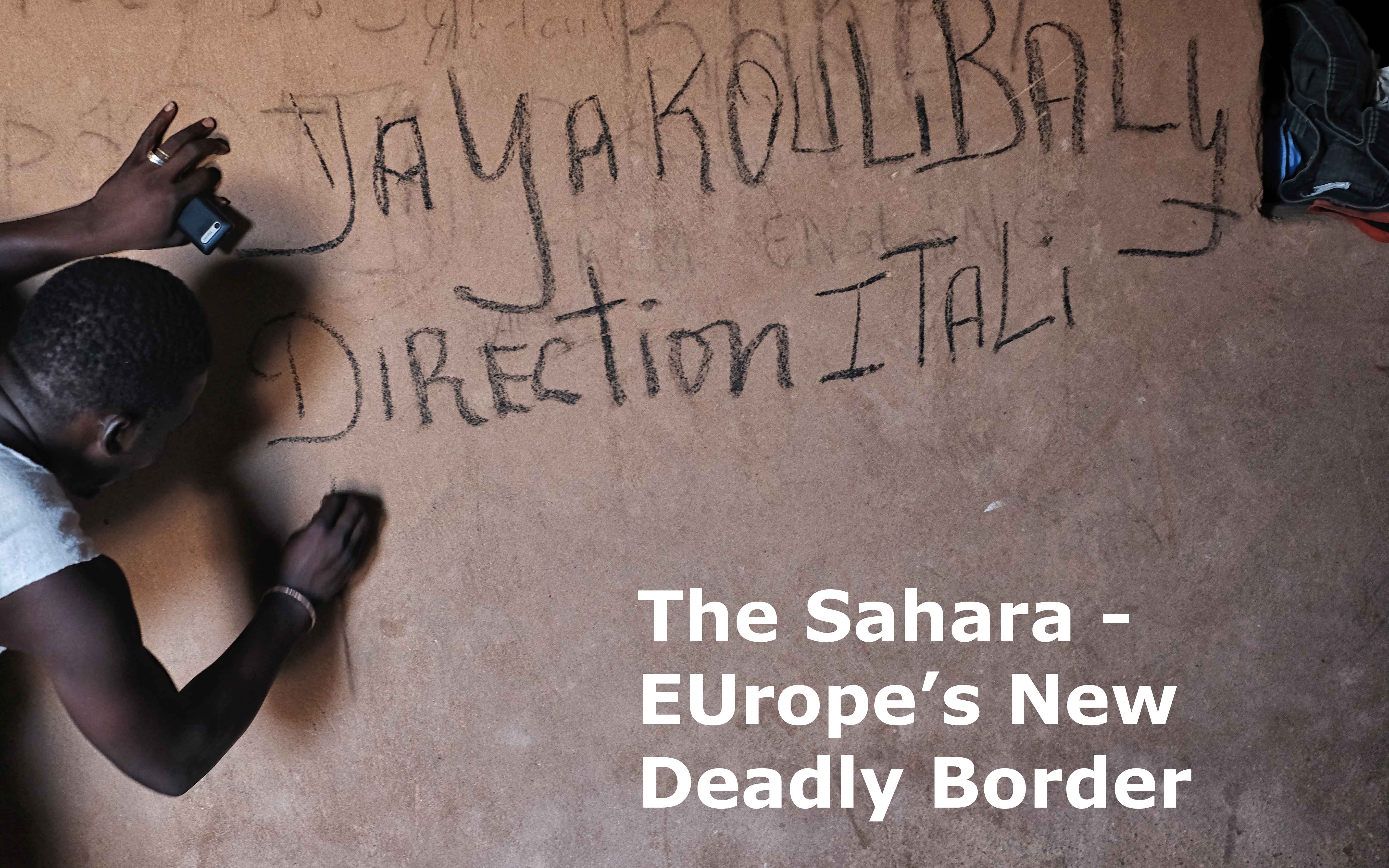
Sahara: Externalisierung der EU-Grenzen
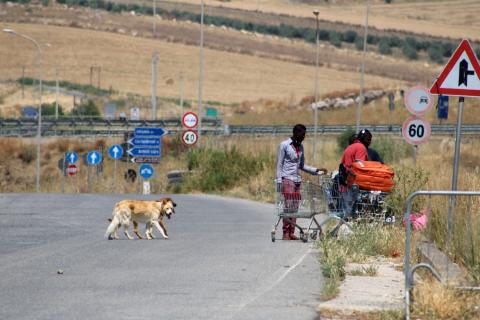
Foto © Giacomo Zandunini
Seit 2017 ist die Externalisierung der EU-Grenzen in Afrika einer unserer Arbeitsschwerpunkte. Seitdem beobachten wir die Situation in der Sahara und der Sahelzone. Damit begann auch unsere Zusammenarbeit mit NGOs in Libyen, Niger und Tschad.
Niger ist zum zentralen Knotenpunkt für Migrant*innen und Geflüchtete in Richtung Norden geworden. In den letzten zwei Jahren haben vermutlich Hunderte, vielleicht Tausende von Menschen in der Wüste ihr Leben verloren.
Mit der Eröffnung des ersten militärischen Außenpostens in Niger hat sich Deutschland als Partner Frankreichs der direkten Intervention in der Sahelzone angeschlossen. Die Bundeswehr beschreibt ihren Auftrag und ihr Mandat als "Bekämpfung der organisierten Kriminalität und des Terrorismus" und seit 2015 auch zur "Kontrolle der irregulären Migration".
Bereits 2017 wurde der UNHCR in den Medien damit zitiert, dass sich die Zahl der Todesopfer in der Wüste gegenüber der Zahl der Menschen, die im Mittelmeer sterben gelassen werden, voraussichtlich verdoppeln wird. Zivilgesellschaftliche Organisationen in der Sahara und der Sahelzone berichten über zahlreiche Fälle von Mirgrierenden, die sich in der Wüste verirren und in der Folge verdursten.
borderline-europe dokumentiert Menschenrechtsverletzungen und unterstützt Aktivist*innen entlang der Migrationsrouten in der Sahara und der Sahelzone.
Unsere Freund*innen vom Menschenrechtszentrum Gatroon beobachten die Menschenrechtsverletzungen im libyschen Gatroon. Sie sind mit zahlreichen Todesopfern in der Wüste und groben Menschenrechtsverletzungen in Libyen konfrontiert.
Wir arbeiten auch mit Radio Koode mit Sitz in Nigeria zusammen, dem ersten grenzüberschreitenden Radiosender von Fulfulde, der in der gesamten Sahelzone sendet. Hier findet ihr den Live-Broadcast: https://koode.net
Unsere Arbeit:
- Externalization Conference Sahara: The Deadly EU External Border V, Podiumsdiskussion 2022
- Externalisation of the EU borders - Building Blocks of the Invisible Wall in the Sahara, interaktive Recherche-Pinnwand 2020
- Die Sahara - Europas tödliche Außengrenze II, Publikation 2019
- The Sahara - EUrope's new deadly external border, Publikation 2018
- Cooperation with Radio Koodé (Nigeria), video 2022
- Interview with Manzo Diallo - Alarm Phone Sahara, Video 2019
- Interview with Kumut Imesh - filmmaker "Revenir", Video 2019
- Wie die IOM und die EU-Gelder die unsichtbaren Grenzen sichern, Konferenz 2020, hier zum Nachschauen
- Die Sahara - eine neue tödliche Außengrenz der EU? Externalisierung der Grenzen II, Konferenz 2018
Blogroll - Aktuelles:
https://alarmephonesahara.info/en/
https://koode.net
https://afrique-europe-interact.net
https://ffm-online.org/category/migration-control/
https://www.facebook.com/gatroon.rights
Spendet für das Projekt:
Stoppt das Sterben in der Wüste: https://www.betterplace.org/de/projects/80853-stoppt-das-sterben-in-der-wueste-menschenrechtsmonitoring-in-libyen