Denmark-Rwanda deal: deporting people, outsourcing & offshoring asylum

In September 2022, Denmark and Rwanda signed an agreement on the possible transfer of asylum seekers to the East African country. The prospective ‘transfer-system’ resembles the one announced by the UK in April. About 1,000 people may be deported yearly to a country thousands of kilometres away where refugees are killed and forcibly recruited by militias. After fleeing their countries, crossing borders, and risking their lives to reach a safe place, people are pushed back into a state of imminent danger. Learn more about the prospective Denmark-Rwanda deal, as well as its possible implications, in this article.

Language(s): Englisch / English
Publisher: Beatriz Jorge, borderline-europe

publications

Show all


Sudanes Refugees in Egypt - Risk of Restrictive Policies

he new Asylum Act and existing border management policies exacerbate risks. By permitting arbitrary detention and deportations under the pretext of national security, these measures have created an environment in which the fundamental rights of refugees are systematically disregarded.
Language(s): Englisch / English

What exactly is Europe paying for in Libya?

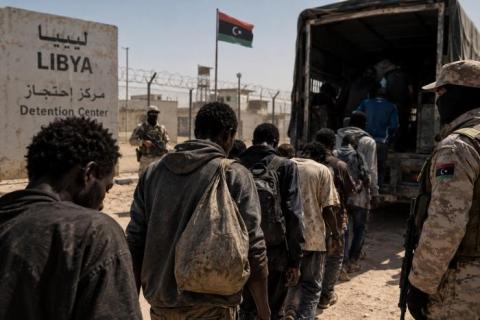
In den letzten Monaten wurden Tausende von Flüchtlingen und Migranten von der libyschen Regierung an die Grenzen oder in die Wüste abgeschoben oder sind in unbekannten Haftanstalten verschwunden. Gleichzeitig verspricht die EU-Kommission der libyschen Regierung neue Gelder. Die EU behauptet, ihr Geld rette Leben, schütze Schutzbedürftige und bekämpfe Schleuser. Ihre eigenen Rechnungsprüfer, ihr eigener Bürgerbeauftragter und eine UN-Untersuchungsmission haben jedoch jeweils festgestellt, dass Brüssel dies weder nachweisen kann noch will. Wofür genau bezahlt Europa also in Libyen? Weiß es, wo sein Geld landet, und überprüft das überhaupt jemand?
Language(s): Englisch / English

Building Borders from Afar

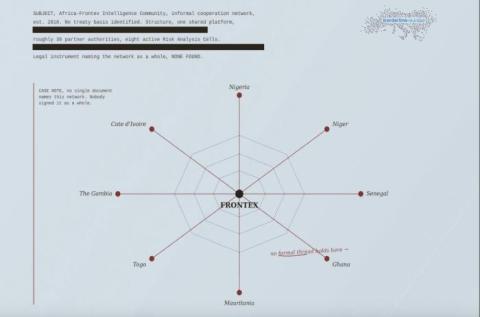
AFIC does not patrol a border or fly a drone.The Africa-Frontex Intelligence Community does something quieter and, in some ways, more durable. It builds the intelligence architecture that other, more visible forms of externalisation rely on. Understanding it means understanding how the EU's border has learned to project itself outward without ever formally crossing a line on a map.
Language(s): Englisch / English