Statement on a temporary relocation mechanism

The signing organisations, directly involved in and affected by the content of the EU Summit on 23 September in Malta, jointly share the following considerations and recommendations to the European Union. The question of a fair and human needs-based relocation mechanism remains unresolved. In recent months there have been repeated stand-offs of up to 19 days until the EU Member States (MS) have agreed on an ad-hoc distribution scheme of people rescued from distress at sea. This practice contradicts international maritime and human rights law, in particular with regards to the obligation set by search and rescue regulations to bring shipwrecked people to a “place of safety” (PoS) without any delay.

Language(s): Englisch / English
Publisher: Sea-Watch

publications

Show all


Sudanes Refugees in Egypt - Risk of Restrictive Policies

he new Asylum Act and existing border management policies exacerbate risks. By permitting arbitrary detention and deportations under the pretext of national security, these measures have created an environment in which the fundamental rights of refugees are systematically disregarded.
Language(s): Englisch / English

What exactly is Europe paying for in Libya?

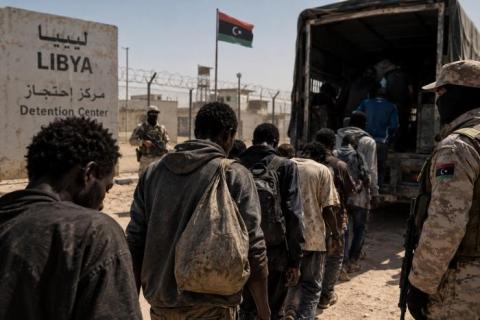
In den letzten Monaten wurden Tausende von Flüchtlingen und Migranten von der libyschen Regierung an die Grenzen oder in die Wüste abgeschoben oder sind in unbekannten Haftanstalten verschwunden. Gleichzeitig verspricht die EU-Kommission der libyschen Regierung neue Gelder. Die EU behauptet, ihr Geld rette Leben, schütze Schutzbedürftige und bekämpfe Schleuser. Ihre eigenen Rechnungsprüfer, ihr eigener Bürgerbeauftragter und eine UN-Untersuchungsmission haben jedoch jeweils festgestellt, dass Brüssel dies weder nachweisen kann noch will. Wofür genau bezahlt Europa also in Libyen? Weiß es, wo sein Geld landet, und überprüft das überhaupt jemand?
Language(s): Englisch / English

Building Borders from Afar

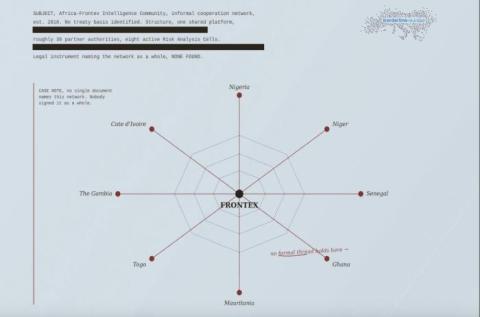
AFIC does not patrol a border or fly a drone.The Africa-Frontex Intelligence Community does something quieter and, in some ways, more durable. It builds the intelligence architecture that other, more visible forms of externalisation rely on. Understanding it means understanding how the EU's border has learned to project itself outward without ever formally crossing a line on a map.
Language(s): Englisch / English